
Can a 3-axis machine tool machine curved parts? Yes, it can, using a ball-nose end mill to sweep workpiece surfaces. However, “whether a task is technically possible” and “whether investing in a 5‑axis machine makes business sense” are two completely different things.
I. How Does a 3-Axis Machine Cut Curved Surfaces?
Simply put, the principle behind machining curved surfaces on a three-axis machine tool involves using a ball-nose cutter to sweep across the surface row by row. If a flat-bottom cutter were used, it would interfere with the curved surface (causing damage to the part), so a ball-nose cutter must be used. However, because the ball-nose cutter sweeps across the surface row by row, there will be irregularities—known as tool marks—between adjacent rows. The depth of these tool marks determines the surface finish of the part.
There are two key factors that determine the smoothness of the machined surface:
1. Step-over: This refers to the distance between two consecutive rows machined by the tool. The closer the step-over, the smoother the machined surface, but the machine tool will take longer to complete the operation; the farther the step-over, the rougher the machined surface.
2. Tool diameter: The larger the tool’s radius, the gentler the curvature between two passes. Therefore, larger tools can use a larger step-over, resulting not only in a smoother surface but also in reduced machining time.
Additionally, while the surface displayed on the computer is a perfect curve, the code for a three-axis machine tool can only move in straight lines. The more the program breaks the curve into smaller segments (the smaller the chordal deviation setting), the closer the part will be to the perfect design; however, the code will become longer, and machining will slow down.
However, no matter how perfectly the program calculates, three-axis machine tools have a “physical limit.”
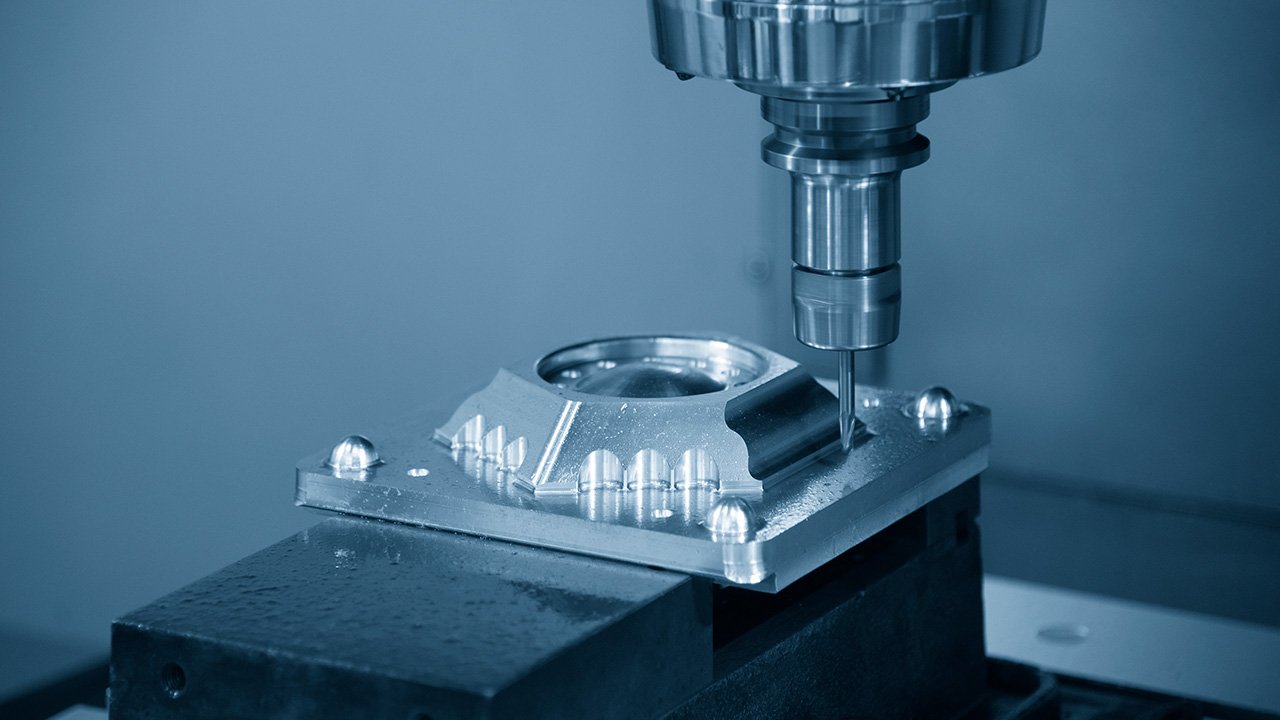
II. “Blind Spots” in Three-Axis Surface Machining: Undercuts
The step size and chordal deviation discussed above both address the issue of “how to machine a surface more smoothly.” However, all of this hinges on one major prerequisite: the tool must be able to reach that surface.
This is because the tool on a three-axis machine tool can only ever cut vertically from top to bottom. If your part features a surface that simply protrudes outward, a three-axis machine tool can handle it perfectly well. However, if the surface of your part is concave (commonly referred to as an “undercut”) or if it is a very deep blind hole, the overhanging material will block the vertically descending tool. Since the tool cannot tilt to bypass the obstacle, it simply cannot reach underneath to cut.
There are three ways to address undercuts:
1. Three-axis machining centers cannot handle undercuts on their own, but specialized cutting tools can be used instead—such as T-shaped cutters and dovetail cutters. These specialized tools differ from standard end mills; they are more expensive to purchase and have slower cutting speeds. Furthermore, if the groove is too deep, even with a specialized tool, the tool shank may collide with the surrounding part wall before the tool reaches the groove—in which case, a three-axis machine is truly powerless.
2. Split the part into two halves and machine them separately.
3. Machine the part using a five-axis machine tool. The cutting head of a five-axis machine tool can rotate or tilt the part during machining to directly bypass obstacles. This is the most thorough solution, but the equipment costs are higher.
Summary: If your part drawings include undercuts, you’ll need to consider a five-axis machine tool when purchasing equipment.
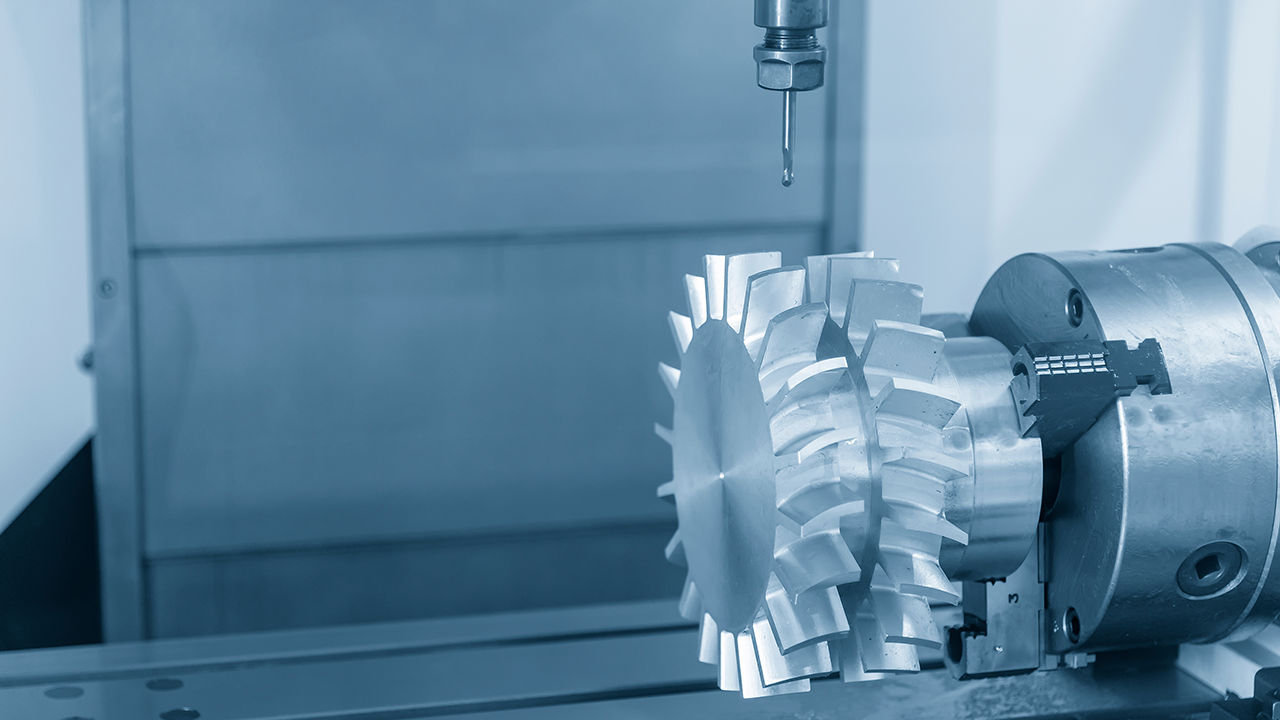
III. When is a 5-Axis Machine Actually Worth It?
Before deciding to purchase a 5-axis machine, let’s first rule out one scenario: if the part to be machined has linear grooves—such as an open T-slot or a side-opening slot—a 3-axis machine can handle the job simply by switching to a special cutting tool. There’s no need to buy a 5-axis machine.
However, when the part’s shape is particularly complex—such that a 3-axis machine cannot reach the area no matter how the tool’s angle is adjusted—or when the groove is too deep, a 3-axis machine would require an excessively long tool. If the tool protrudes too far, rigidity decreases, making it highly prone to vibration during machining. This can result in a pitted surface finish or even tool breakage.
A five-axis machine tool can rotate the cutting tool to machine the part and can also use short tools to reach deep areas of the part. Short tools are less prone to vibration, offer higher rigidity, and produce parts with a smoother surface finish and greater precision.
If the parts you machine are primarily complex aircraft components or medical device parts, it is better to prioritize the use of a five-axis machine tool.
Ⅳ. Should You Choose a 3-Axis or a 5-Axis Machine?
Comparison Table:
| Machining Methods | 3-Axis Machining | 5-Axis Machining |
| Suitable Part Features | Top-surface curves, simple side grooves | Complex undercuts, deep cavities, multi-faceted features |
| Advantages | Low equipment cost, simple programming | Single-pass machining, high precision, smooth surface finish |
| Disadvantages | Deep cavities are prone to tool vibration; complex features require multiple setups | Expensive equipment, complex programming |
As mentioned earlier, if your parts feature complex undercuts or extremely deep blind holes, a five-axis machine tool is the best choice. However, five-axis machine tools are significantly more expensive than three-axis machine tools.
If your parts feature only standard curved surfaces or simple lateral slots, using a 5-axis machine would be overkill. In such cases, a 3-axis machine—combined with proven CAM programming techniques, specialized cutting tools (such as T-shaped end mills), or custom fixtures—can not only fully meet your precision requirements but also deliver shorter lead times at a significantly lower cost than a 5-axis machine.
Our company has specialized in the field of 3-axis machine tools for many years. If you’re struggling with equipment selection and unsure whether spending a large sum on a 5-axis machine is worth it, please feel free to contact us. If your part’s manufacturing process absolutely requires a 5-axis machine, we’ll tell you honestly—we’ll never mislead you just to make a sale. If your part can be efficiently machined with a 3-axis machine, we’ll recommend the most cost-effective machine configuration for your needs.
FAQ
Can a 3-axis CNC machine cut undercuts?
If the part to be machined has a simple open slot (like a T-slot), it can be machined using a specialized cutting tool. However, for parts with complex, deep slots, or internal undercuts, the tool shank will collide with the part. In such cases, a 3-axis machine cannot machine that area, and a 5-axis machine must be used.
Does machining complex parts on a 3-axis machine require more fixtures?
Yes. A major hidden cost of 3-axis machining is that complex parts often require multiple setups (flipping the part). Each setup requires custom fixtures and adds setup time. A 5-axis machine can machine 5 faces in a single setup, saving time on fixtures and reducing positioning errors, which is why it is often preferred for multi-faceted parts.
How can I know for sure which machine I should buy?
Don’t hesitate—send your drawings to our engineering team. If a five-axis machining job is required, we’ll tell you straight up; if a three-axis job will work, we’ll help you save money.

